

Ah, the potluck cookout—a summer classic. But if you’ve ever hosted one, you know the pain: people arrive late, dishes show up half-prepared, and somehow all the good stuff disappears before everyone gets a plate.
At one July gathering, the grill was fired up, the music was perfect, and the drinks were flowing. But when guests finally lined up for food, all the sides were gone. The potato salad? Snapped up. The baked beans? Emptied. Someone even confessed they took two plates to “save for later.” Guests at the end of the line were left with nothing but bread and pickles.
Potluck blues are real. Without planning, you end up with too much of one thing and not enough of what people actually want. A little structure—or a professional touch—keeps the table balanced so everyone leaves full and happy.
It seems simple: everyone brings a dish, and voilà—a feast! But in reality, potlucks rarely unfold that smoothly. People tend to bring what’s easiest for them, not what’s most needed for the group. That’s why you’ll often end up with six bags of chips, three trays of cookies, and no real sides to balance out the main dish.
And then there’s timing. Guests arrive at different hours, which means hot food gets cold, cold food sits out too long, and the early arrivers eat the best of everything while the latecomers scrape together what’s left. Add in the “double plate” folks who stock up for seconds before others even get their first—and suddenly, your beautifully imagined spread turns into a bare table.
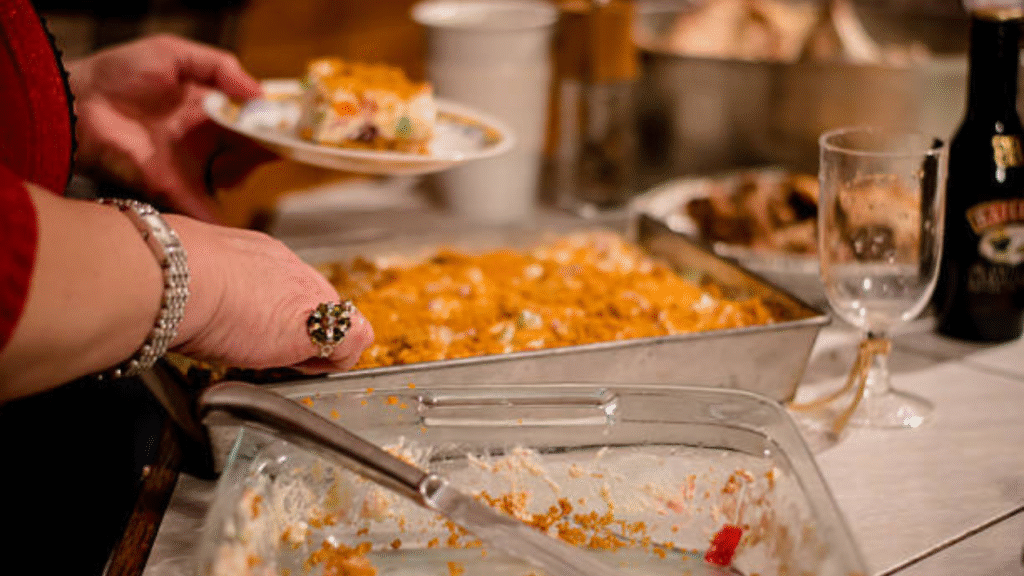
The truth is, potlucks can be amazing—if there’s just a little planning behind them. Here are some essentials that can turn a chaotic cookout into a feast where nobody goes home hungry:
Assign Categories – Instead of letting everyone choose at random, assign people to bring a side, a dessert, a drink, or a main dish. That way, you’ll have balance without six tubs of macaroni salad fighting for fridge space.
Create a Sign-Up List – A shared Google doc or sign-up sheet works wonders. Guests can list what they’re bringing so there’s variety and less duplication.
Overestimate Portions – Plan for more than you think you need. If you expect 20 guests, plan food for 25. Leftovers are far better than shortages.
Have Backup Staples – Keep some essentials on hand (extra bread, salad greens, chips, or fruit) just in case the spread runs thin.
Timing is Key – Encourage guests to arrive on time or ask them to bring dishes that travel and hold well. That way, the food stays fresh and everyone enjoys it.
Of course, not everyone has the time or energy to manage these details. That’s where having a professional touch makes all the difference. Event planners (or even just a dedicated “food coordinator” among friends) can make sure dishes are assigned, quantities are enough, and the flow of food works for everyone.
Imagine the difference: instead of missing out on sides, your guests enjoy a beautifully balanced spread—grilled meats, hearty sides, crisp salads, refreshing drinks, and desserts that actually last until the end of the party. Everyone leaves with full stomachs and happy memories, not grumbles about the missing potato salad.
The beauty of a potluck is in the shared effort, but without just a bit of structure, it can quickly turn into chaos. So the next time you’re planning one, don’t just cross your fingers and hope for balance—put a plan in place. Because nothing kills the mood faster than watching all the sides vanish before you even grab your plate.
After all, the food is what brings people together. And when it’s done right, nobody walks away asking, “Where did all the sides go?”